Why The 48 Hour Window Matters More Than You Think
Mold spores are everywhere. They are in your Windfall living room right now, floating in the air, resting on surfaces, completely harmless until they find three things: moisture, a food source, and time. Drywall paper, wood framing, carpet backing, insulation, and cardboard storage boxes are all food sources. Indoor temperatures between 60 and 80 degrees, which describes virtually every occupied home in Central Indiana, are ideal. The only variable you control is moisture, and the only window you have is short.
Within the first 24 hours after water damage, materials begin absorbing moisture deep into their fibers. Drywall wicks water vertically at roughly one inch per hour. Carpet padding holds three to five times its weight in water. Subfloor sheathing swells and loses structural integrity. None of this is mold yet, but the conditions are being set. Once a material crosses roughly 16 percent moisture content and stays there, you are no longer running a drying job. You are running a race against active microbial growth.
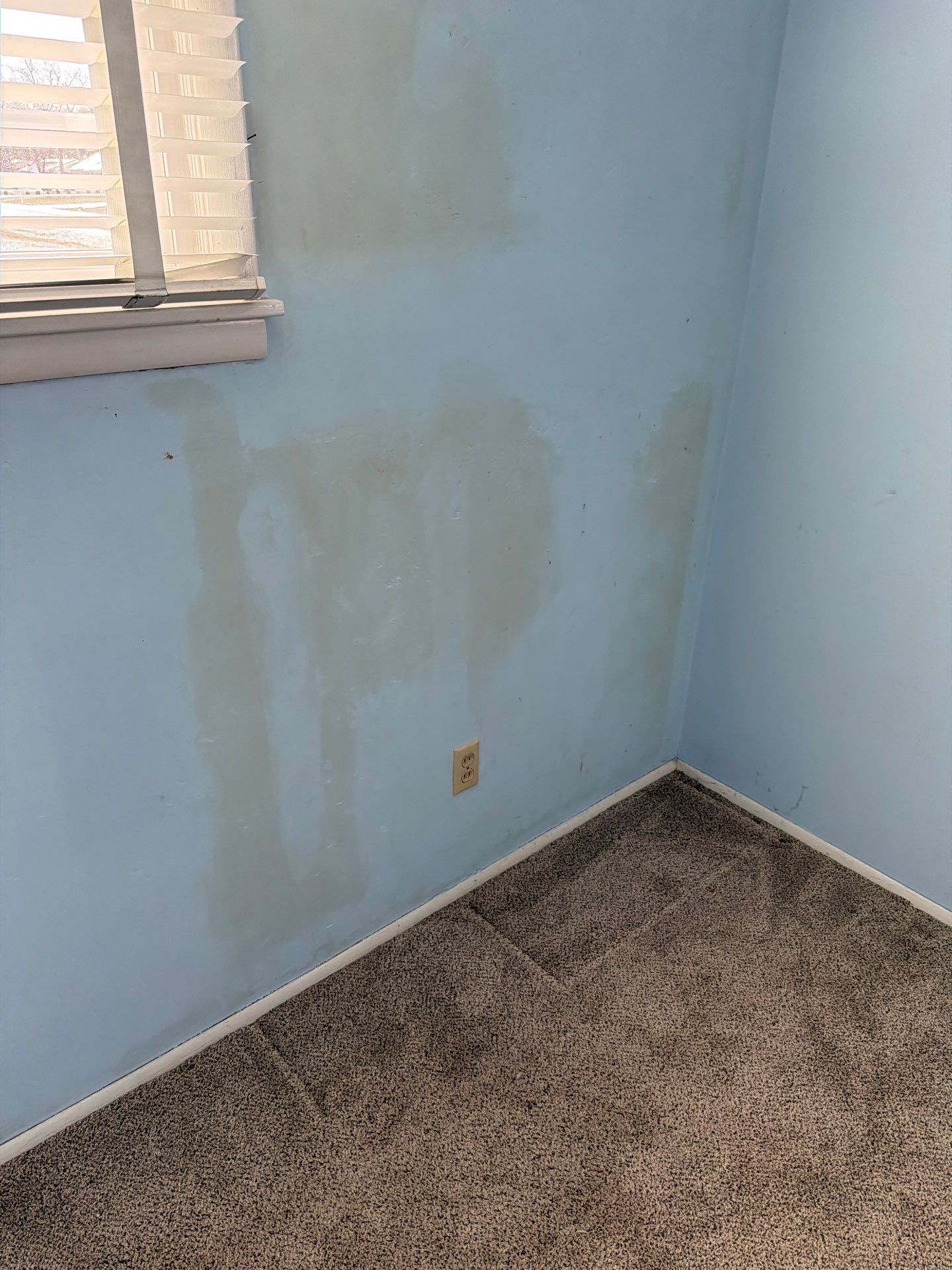
By hour 48, under typical Indiana humidity, spores that landed on wet cellulose materials have germinated. You will not see anything yet. The colonies are microscopic. But the smell, that faint musty note people describe as old basement or wet cardboard, is the first warning sign. By day four to seven, visible growth appears, often behind baseboards, under cabinets, or on the back side of drywall where you cannot see it without cutting an inspection hole. Our professional drying timeline guide explains why aggressive air movement and dehumidification within the first 24 hours changes the entire trajectory of a loss.
Seasonal conditions in Windfall change the math too. A summer loss with 70 percent outdoor relative humidity dries slower than a January loss where furnace heat and dry air help pull moisture from materials. We adjust dehumidifier sizing and air mover placement based on psychrometric readings taken every visit, not on a generic plan. Two homes with identical square footage and identical leaks can need very different equipment loads depending on outdoor conditions, building envelope tightness, and the specific materials affected.
The Hour By Hour Reality: A Comparison Table
The table below shows what is happening inside your Windfall property at each stage after water intrusion, what it costs to address at that stage, and what your realistic outcome looks like. These ranges reflect what we see across hundreds of jobs and align with IICRC Category 1 and Category 2 losses. Category 3 sewage situations move faster and are covered in our black water cleanup breakdown.
| Time Since Water Damage | What Is Happening | Visible Signs | Typical Scope | Cost Range | Insurance Outlook |
|---|---|---|---|---|---|
| 0 to 6 hours | Water spreading, materials absorbing, no microbial activity | Wet floors, damp walls, no odor | Extraction and drying only | $1,500 to $4,500 | Strong claim, mitigation documented |
| 6 to 24 hours | Deep saturation, moisture wicking into framing | Swollen baseboards, soft drywall | Extraction, controlled drying, monitoring | $2,500 to $6,500 | Standard covered loss |
| 24 to 48 hours | Spore germination begins on cellulose | Faint musty odor possible | Drying plus antimicrobial application | $3,500 to $8,000 | Still covered if action taken |
| 48 to 72 hours | Active colonization, microscopic growth | Stronger odor, surface discoloration starting | Drying, antimicrobial, selective removal | $5,000 to $12,000 | Adjusters scrutinize delay |
| 3 to 7 days | Visible mold growth on multiple surfaces | Black, green, or white patches | Containment, demolition, remediation | $8,000 to $20,000 | Mold often capped at $5,000 to $10,000 |
| 7 to 30 days | Established colonies in cavities and HVAC | Strong odor, health symptoms in occupants | Full remediation, air scrubbing, clearance testing | $15,000 to $40,000+ | Claim denials common for neglect |
What This Table Actually Means For Your Decision
Look at the cost column. A homeowner in Windfall who calls us within six hours of a dishwasher supply line failure is looking at a job in the $2,000 to $4,000 range, fully covered by a standard policy, and dry in three to four days. That same homeowner who waits until Monday morning because the leak started Friday night is now looking at $8,000 plus, partial coverage at best, and two to three weeks of disruption. The water itself did not get worse. Time made it worse.
The insurance piece deserves attention. Most homeowners policies cover sudden and accidental water damage and the resulting mold if mitigation began promptly. Once an adjuster sees moisture readings, drying logs, and a clear timeline showing fast response, claims move smoothly. When the timeline shows a four day gap between discovery and action, mold sublimits kick in, often capping coverage at $5,000 or $10,000 regardless of actual remediation cost. We document everything from the moment we arrive, which protects your homeowners insurance claim and gives the adjuster what they need to approve the full scope.
Hidden moisture is the wild card. Water behind walls, under tile, or in wall cavities will not dry on its own no matter how many fans you run. Surface materials feel dry while the cavity behind them stays saturated for weeks. This is why thermal imaging and penetrating moisture meters matter, and why a free inspection is worth scheduling even when things look fine on the surface. We have caught hidden saturation in dozens of Windfall homes where the homeowner thought they had dodged it.
What To Do In The First Hour
If you discover water damage right now, the first hour sets the tone for the entire claim. Shut off the water source at the valve or main. Move what you can off wet carpet and out of standing water, especially anything paper, fabric, or wood. Take phone photos and a short video of every affected room before anything is moved or cleaned. Call your insurance carrier to open a claim number, then call Windfall Water Restoration for emergency mitigation. Do not rip out drywall or pull carpet yourself. Adjusters want to see the loss in place, and unnecessary demolition can complicate your coverage. The faster a moisture map and drying plan exists on paper, the stronger every downstream decision becomes.